
Down Payment Assistance
In California
Before you dig into our comprehensive guide to Down Payment Assistance, there are 6 important steps you need to know about and complete. You may already have some of them checked off your list, but if you haven't yet – do yourself the favor and complete at least one TODAY!
5 Essential Steps to Get Started
Complete these steps to put yourself in the best position for homeownership
Look at Properties in Your Target Areas
Set that intention in your mind that you would like to own that home or one like it someday soon, and commit to taking that action.
Our top resource for viewing homes that may qualify for Federal, State, or Local Down Payment Assistance Programs can be found at Zip-HudHomes.com. You can sign up for their trial offer for only $1 and see some of the amazing deals on homes.
Get Your Current Credit Report
Most all Down Payment Assistance Programs will require you to have a current credit report on hand when applying. Even if you have work to do to get your credit score up, you should start by getting your report first.
Our top resource for getting your credit report can be found at YourScoreAndMore. They also have a $1 trial offer to get your report.
Complete the HUD-Certified Homebuyer Course
Taking the course is a smart next step for any first-time homebuyer. It's required by many local, state, and federal housing and down-payment assistance programs and is widely accepted by lenders and housing agencies nationwide.
Not only does it boost your eligibility for down payment assistance, but it also helps you avoid costly mistakes that many first-time buyers make.
Apply For FREE Money For Housing Assistance
Browse Housing Assistance Programs, including Section 8 Government Vouchers, Section 8 Home Buying Programs and Subsidized Housing Payments.
Consider Rent-To-Own Home
If your credit score is insufficient to get reasonable mortgage rates, or it's hard to save a lump of money towards a down payment, a rent to own agreement might be the solution.
Obtaining a rent-to-own home can help bridge the gap between renting a property and buying it. You make rent payments each month and a portion of those payments can count toward your down payment.
Take the initiative to complete any or all of the 5 steps above and put yourself in a position to make your homeowner dreams a reality.
Now, grab a coffee, sit down and read through our comprehensive guide to Down Payment Assistance. It could be the single most important thing you do all day!
Your Comprehensive Down Payment Assistance Guide
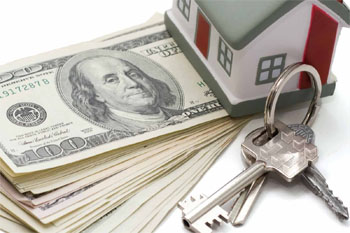
Huge numbers of Americans who want to be homeowners are currently saving for a down payment. But they know little about lenders' down payment requirements. And too few have even heard of down payment assistance programs.
Renter to Homeowner in a Flash — If You Know About DPA
Down payment assistance (DPA) programs can be lifesavers. Because they can provide some or all the down payment and/or closing costs to buy a home. Sometimes, DPA is an outright grant you never have to repay. More commonly, it's some form of loan — often one with low or even no interest.
Many Could Qualify
In a 2025 update to report, Barriers to Accessing Homeownership, the Urban Institute reckoned between 22% and 51% of people in the metropolitan statistical areas it studied would be eligible. And these consumers could receive between $2,000 and $39,000 each.
When Ignorance Isn't Bliss
Not knowing about these helpful programs forces aspiring homeowners to save much longer and much harder than necessary. While home prices rise faster than incomes. Buying sooner makes sense — today's low mortgage rates won't stick around forever.
Down Payment Assistance Programs
Across the country just waiting to help wannabe homebuyers achieve their ambitions. Every community is covered by at least one.
What Would-Be Homeowners Really Need to Know About DPA
At the end of 2017, the Urban Institute explored gaps in the knowledge of those who'd like to be homeowners. Here are some of the findings from a survey included in the report:
of those currently renting said saving for a down payment is an obstacle to their homeownership
of respondents were either unaware of how much lenders require for a down payment or believed down payments must be above 5% of the purchase price
think lenders require a 10% down payment
believe lenders expect a 20% down payment
But they're flat-out wrong! Down payments of 3%-3.5% are commonplace. And those who are eligible for VA loans or USDA loans need no down payment at all. With DPA, buyers may need less than 3% and may get help with closing costs as well. You don't know unless you ask.
How Down Payment Assistance (DPA) Works
It's worth noting that the agencies, charities and local governments that sponsor these programs fund them annually. That means they can be flush with cash at the start of each financial year but run out before the end.
The federal government fiscal year runs from October 1 until September 30. So you have a better shot at that money in the fall than you do late summer.
But program fiscal years are not all the same, and not all budget annually. With thousands of down payment assistance programs nationwide, operating in virtually every community, you may have several choices. Nearly all programs are local and independent of each other. Many are run by state, city or local governments and others by not-for-profit organizations and charities.
Finding DPA Programs
The sheer number of organizations and programs means there's no standard set of rules for how down payment assistance works. That makes them harder to find and understand. You may qualify under one program but not another. And you might get an outright grant (effectively a gift) from one but a low- or zero-interest loan from another.
Approved Lenders
When you accept down payment assistance, you'll borrow from a lender that participates in the program. And those approved lenders generally offer a wide range of mortgages, including ones backed by the government (VA, USDA or FHA loans) or that comply with Fannie Mae and Freddie Mac's rules.
Closing Costs
Some assistance programs explicitly allow you to use the funds they provide for closing costs. Others may not. Some programs require a minimum contribution from you when you use them to buy a home.
Do I need my credit report to apply for a Down Payment Assistance program?
Yes, most programs will ask you to have a current credit report on file.
How to Qualify for Down Payment Assistance
Eligibility criteria vary wildly between different programs. So, if you don't qualify for one that covers your area, it's worth hunting further to see if there's one that will help you.
Some programs specialize in helping select groups. So it's possible you may get to the front of the line if you're a veteran/current servicemember, or a firefighter, or work in education, health care or law enforcement. Many others prioritize applicants on average or lower incomes. But anyone with a mortgage preapproval letter can apply.
Many programs insist you take a homebuyer education course before they'll give you any money. You may be able to complete your course online. This is an important step, and understanding homeownership increases your chance of success.
First-Time Buyer Status is Not Like Virginity
One requirement for a majority of programs (but not nearly four in 10 of them) is that you be a first-time buyer. But don't panic...
Once you lose your virginity, it's gone forever. But you can be a "first-time" buyer more than once.
The U.S. Department of Housing and Urban Development (HUD) counts you as a first-time buyer if you haven't owned a home in the last three years. To be clear, HUD's website says:
"An individual who has had no ownership in a principal residence during the 3-year period ending on the date of purchase of the property. This includes a spouse (if either meets the above test, they are considered first-time homebuyers)."
There's no law to say everyone must adopt HUD's definition. But many programs do. So if you or your spouse haven't had an ownership interest in a primary home over the last three years, carry on and apply for programs for first-time buyers.
The Home Needs to Qualify, Too
When you apply to a program, the home you wish to purchase is also a factor. These programs are not for trust fund kids to buy mansions. The home you buy can't be expensive for the area. Usually, your maximum is some percentage of the median price for homes, often up to 115%.
For instance, if home prices ranged from $200,000 to $1,000,000 in your area (usually defined as your county or metropolitan statistical area), and half of the homes cost more than $400,000, and half cost less, the median price would be $400,000. If the limit was 115% of this, the maximum eligible home price would be $460,000 ($400,000 × 1.15).
Click Here To See Homes NowMultifamily Dwellings and Down Payment Assistance
Suppose you want to buy a multifamily building, containing two, three or four units. Many down payment assistance programs won't help. But at least one in five will.
You'll probably have to live in one of the units. Presumably, you'll want to rent out the other one, two or three. And that's no problem.
DPA Programs Available in Your Area
We've covered the main points about how down payment assistance works. Here are some of the main programs that may operate in your state:
California Down Payment Assistance
No state is better served than California when it comes to down payment assistance. There are 357 programs delivered by 231 agencies. So be prepared to spend a little time tracking down the one that suits you best.
The California Housing Finance Agency has the MyHome Assistance program, which can provide a loan of up to 3.5% of the home's purchase price or $10,000 (whichever is less). Qualified educators and others employed in the schools system are not subject to the $10,000 limit.
Next Steps for Potential Homebuyers:
- Review Eligibility: Carefully check the eligibility requirements for each program above, as income and purchase price limits may apply.
- Obtain Your Most Recent Credit Report: Your credit score will affect your eligibility for both down payment assistance and mortgage rates.
- Complete a HUD-Approved Homebuyer Course: Many programs require successful completion of a homebuyer education course.
- Contact Local Lenders: Compare mortgage products and confirm which local lenders participate in these assistance programs.
Taking these steps will ensure you take full advantage of the down payment assistance and grant opportunities available. Prepare your documents, take the homebuyer course, check your credit, compare lenders, and reach out to the local housing authority to begin your path to homeownership.
Ready to Start Your Homeownership Journey?
Find a home you like with a minimal down payment at a bargain price.