
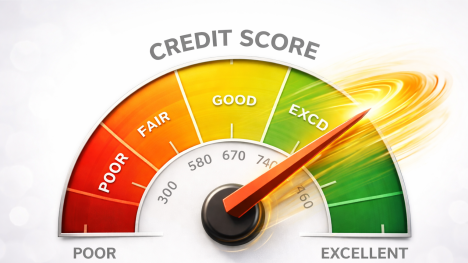
Rapid Rescore: The Trick That Might Save You Thousands
Buying your first home can feel like stepping into a world full of jargon, paperwork, hidden costs, and responsibilities you didn't even know existed.
Let me say this plainly, because there’s a lot of confusion floating around: rapid rescoring isn’t some shady backdoor move, and it’s not reserved only for banks playing games behind the curtain. It’s a legitimate way to get your credit report updated faster when you’ve already done the right things — paid balances down, corrected errors, cleaned up utilization — and timing actually matters.
After 30 years helping buyers across Roseville, Sacramento, and Chico, I’ve seen rapid rescoring save deals, unlock better rates, and knock thousands off the lifetime cost of a loan. But it only works if you understand what it is, what it isn’t, and how to use it properly.
What a Rapid Rescore Actually Does (No Myths)
A rapid rescore doesn’t “fix” your credit. It doesn’t erase real mistakes. What it does is speed up how fast recent, legitimate changes show up on your credit report.
Normally, when you pay down a credit card or correct a reporting error, you’re waiting weeks — sometimes more than a month — for the bureaus to catch up. A rapid rescore compresses that timeline into days.
And here’s the part people get wrong all the time: you don’t have to sit around waiting for a lender to do this for you. If you’re proactive, you can initiate updates yourself using a credit reporting service that pushes verified changes through quickly.
Buyers I work with often use tools like this credit reporting service to upload proof of paid balances or corrected errors and see their updated credit reflected far faster than the normal cycle. When the numbers update, lenders see them. Simple as that.
Why This Matters More Than People Realize
Mortgage pricing is built on tiers. Miss a score cutoff by a handful of points and you can get bumped into a higher rate bracket. Hit it, and suddenly the loan looks very different.
I’ve watched buyers lose out on better terms simply because their improved credit hadn’t posted yet. Same finances. Same behavior. Worse outcome — just because of timing.
That’s where rapid rescoring earns its keep.
How Buyers Actually Use This in Real Life
Example: Paying Down High Utilization
One buyer had a credit card with a $14,000 limit and a balance hovering around $11,500. Their score sat just under 680 — close, but not close enough for the rate tier they wanted.
They paid the balance down to under $3,000, kept documentation, and pushed the update through a credit reporting service. Within days, the utilization reflected correctly, the score climbed into the low 700s, and their lender locked a lower rate.
On a $520,000 mortgage, that rate difference translated into tens of thousands of dollars saved over the life of the loan. Same house. Same buyer. Different timing.
Example: Correcting a Reporting Error
Another buyer had an account showing late even though it had been paid in full. Instead of waiting a full billing cycle, they uploaded proof through a credit service, got the account corrected quickly, and watched their score jump by nearly 15 points.
That bump moved them from “borderline approval” to solid conventional terms. Without the fast update, they would’ve been stuck in a more expensive loan product.
What Rapid Rescore Can and Can’t Do
Let’s keep expectations realistic.
Rapid rescoring can:
- Reflect paid-down credit card balances faster
- Correct verified reporting errors quickly
- Improve utilization-based scoring in days instead of weeks
Rapid rescoring cannot:
- Remove legitimate late payments
- Erase bankruptcies or charge-offs
- Create positive history that doesn’t exist
If nothing has changed in your financial behavior, nothing will change in your score. Speed only matters when there’s something new worth showing.
Why Doing It Yourself Gives You Control
Here’s why I like buyers handling this proactively: control.
When you rely entirely on a lender to request updates, you’re on their schedule. When you manage your credit updates yourself — using a reporting service — you see the changes, confirm them, and walk into the loan process with cleaner numbers.
That matters in competitive markets, where rate locks and offer deadlines don’t wait for the credit bureaus to feel motivated.
If you’re actively preparing to buy, reviewing and updating your credit through a dedicated credit reporting tool can save you time, money, and a lot of unnecessary stress.
When Rapid Rescore Is Actually Worth Doing
This makes sense when:
- You’re close to a key credit score threshold
- You’ve recently paid down high balances
- You’ve corrected errors that haven’t posted yet
- You’re approaching a rate lock or closing date
It’s not about gaming the system. It’s about making sure your real financial progress counts when lenders are making decisions.
The Straight Talk Ending
Rapid rescoring isn’t a miracle. It’s a timing tool.
Used correctly, it can shave real money off your loan. Used blindly, it does nothing.
If you’ve already done the hard work — paying balances down, fixing mistakes, cleaning up utilization — then making sure those improvements show up fast can be the difference between an okay mortgage and a great one.
And when thousands of dollars are on the line, timing isn’t a detail. It’s the whole game.

Written by
Robert Hightower
Founder & Principal Broker
Robert is a licensed real estate broker with over 20 years of experience helping first-time homebuyers. A fourth-generation Chico, CA native, he holds a B.S. in Finance from CSU Chico and has guided hundreds of families through their homeownership journey.
Read full bioReady to Start Your Homeownership Journey?
Find out where can you start: whether it's obtaining a down-payment assistance, finding an affordable home, or taking a rent-to-own option.
Find Your Path